
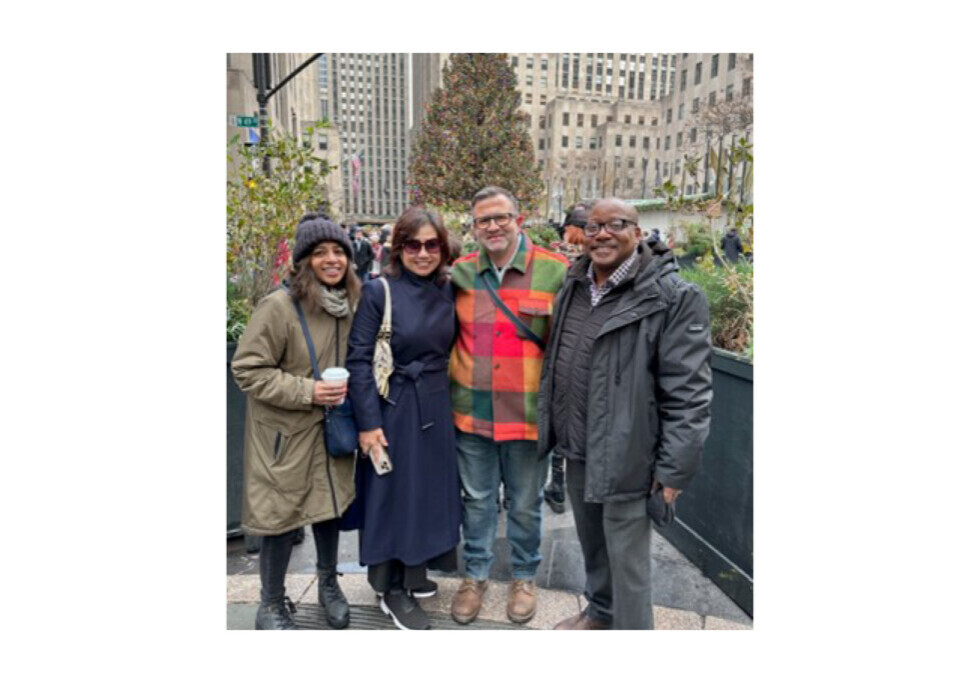
NJEA Design Team Ambassadors bring lessons back to classrooms
By Dr. Kim Pinckney
The affirming curriculum for New Jersey students is more than a task; it is a deeply felt commitment. At the heart of this work is the NJEA Consortium, an initiative born from a three-year NEA Great Public Schools (GPS) grant titled “Cultivating Community, Action, Justice, and Understanding” and based on the vision of Dr. Chrissi Miles. The Consortium aims to move beyond tokenistic inclusion (the“heroes and holidays“ approach) to authentically embed the state’s rich diversity and historically marginalized identities into K-12 teaching and learning.
A critical part of the consortium’s vision are the Design Team Ambassadors (DTAs), a dynamic group of passionate NJEA member educators who work collaboratively to curate impactful and intersectional curriculum resources.
The NYC field trip: an immersive capstone
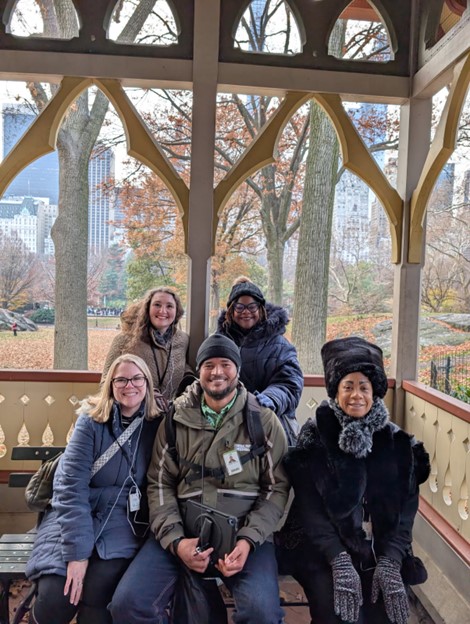
To conclude the initial GPS grant work, the ambassadors embarked on a final field trip to New York City Dec. 5-7. The purpose of this experience was to engage in authentic learning that would immediately inform the final stages of curriculum design, ensuring the resulting resources are grounded in real-world context and cultural relevance. This trip was structured to provide rich, experiential content across a variety of disciplines.
Historic and artistic exploration
Ambassadors chose between a historical visit to the Dyckman Farmhouse Museum or an exploration of art at the Museum of Modern Art.
Social and environmental context
Ambassadors could go on an “iconic views“ tour with the Central Park Conservancy. The tour offered a focus on community, environment and history.
The power of narrative
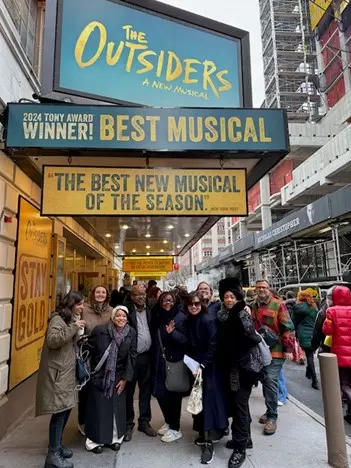
The entire group attended a performance of the musical “The Outsiders“ at the Bernard B. Jacobs Theatre. This experience served as a powerful shared text for collective reflection and design work.
Community building
The ambassadors shared a meal and fellowship at Utsav, an Indian restaurant.
From experience to educational design
The final day of the trip began with reflection, critical reviews of the site visits and sharing observations and analyses. The ambassadors conducted a silent gallery walk focusing on joy and the four macro-curriculum themes which are the core framework of the consortium’s work:
- Self and identity
- Institutions and structures
- Equity and equality
- Activism and advocacy
At each poster, ambassadors identified specific moments from the previous day’s experiences that resonated with one of the themes, how it impacted them as individuals and what could spawn design work. This exercise was a powerful example of how educators can use contemporary arts and immersive experiences to foster meaningful conversations and connect core social justice concepts to narrative.
Due to the constraints of the day, the ambassadors embarked on rapid design brainstorming with the goal of drafting initial field trip itineraries unique to their student populations and disciplines, they developed initial bare bones of a performance task, leveraging the GRASPS framework. GRASPS stands for goal, role, audience, situation, product and standards. This performance-based assessment model is a hallmark of quality curriculum design, ensuring that learning culminates in an authentic demonstration of skill.
I reminded the ambassadors to flesh out Universal Design for Learning (UDL) considerations upon finalizing their designs. UDL is the cornerstone of the consortium’s approach, ensuring that instructional materials and activities are proactively designed to be accessible and engaging for all students from the start, regardless of their learning profile.
Resources for all NJEA members
The resource curation and instructional materials as well as the collaborative designs, field trip itineraries, detailed performance tasks and all resulting curricular resources are available to every NJEA member.
To explore the innovative curriculum designs, instructional materials and field trip resources that resulted from this and prior work, members are encouraged to visit the consortium’s learning portal at njeaportal.learnupon.com.
Dr. Kim Pinckney, Ph.D. is an associate director in the NJEA Professional Development and Instructional Issues (PDII) Division and the consortium coordinator. She can be reached at kpinckney@njea.org.