
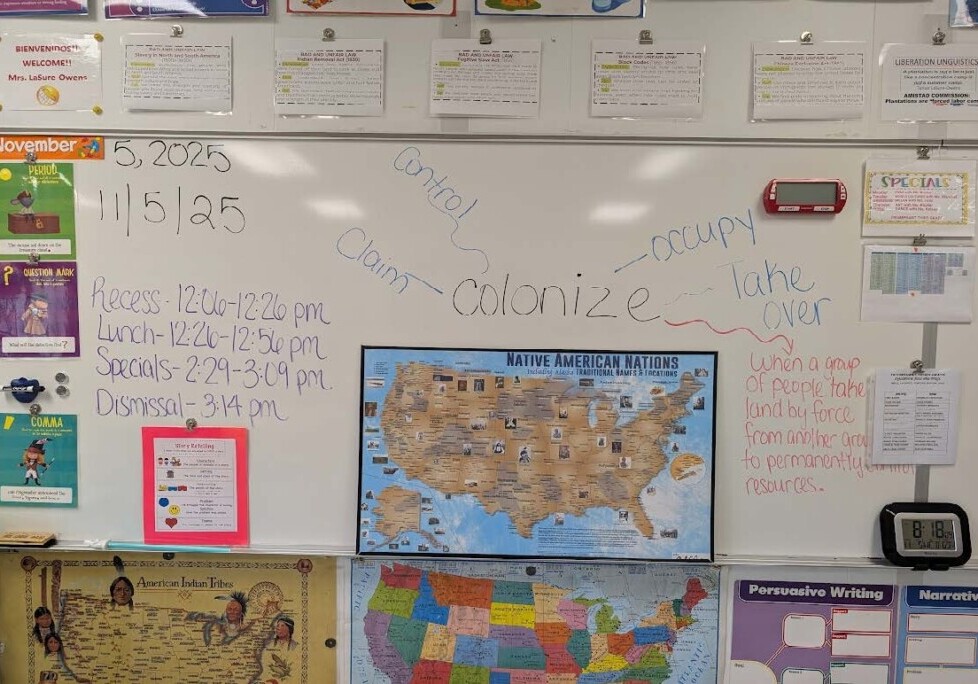
Centering Lenni-Lenape history through joyful, collaborative learning
By Tamar LaSure-Owens, NJEA Consortium Design Team Ambassador
In November, for Native American Heritage Month, Leeds Avenue Elementary School transformed into a vibrant hub of cultural inquiry, collaboration and joyful scholarship. Across grades 3–5, nearly 90 students engaged in a month-long exploration of Lenni-Lenape language, history, storytelling and contemporary culture. What began as a thoughtfully designed project-based learning experience quickly expanded into a schoolwide celebration of Indigenous knowledge and community connection.
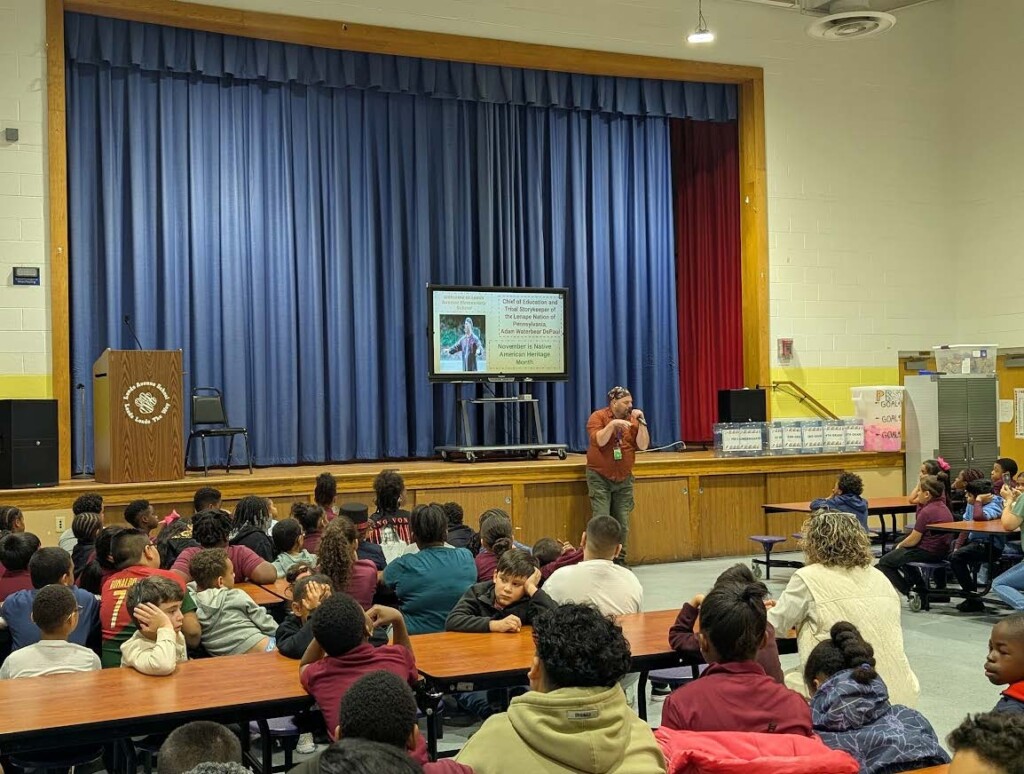
The experience culminated on Nov. 21, 2025, with a deeply meaningful visit from Lenni-Lenape Chief Adam Waterbear DePaul. During a mini-assembly and rotating classroom learning centers, students experienced history as something living and present—not distant or erased. Joined by educators, administrators and families, students came to understand that Lenni-Lenape people are not simply part of the past, but an essential part of our shared present and future.
This work was intentionally designed as a replicable model, not a one-classroom moment. As an NJEA Consortium Design Team Ambassador and classroom teacher, I structured this initiative so that all third-grade educators co-led every stage—from planning and facilitation to reflection and celebration. When teachers learn together, model together and shine together, students feel that brilliance exponentially.
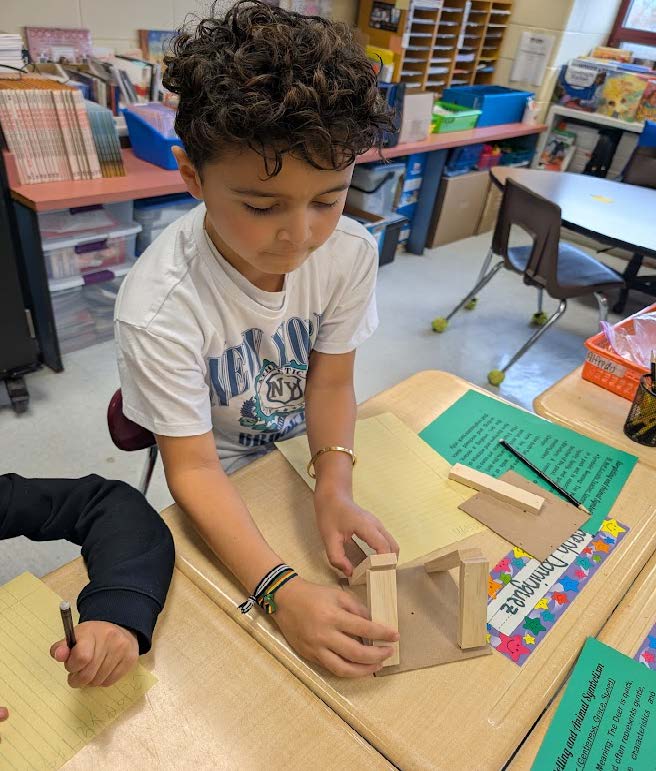
Guided by Dr. Gholdy Muhammad’s Five Pursuits—Identity, Skills, Intellect, Criticality and Joy, students explored Indigenous nations through maps, language, literature and cultural practices while engaging honestly with topics such as the National Day of Mourning. These interdisciplinary experiences aligned with UbD transfer goals and NJEA Consortium macro themes, supporting students in examining multiple perspectives, connecting past to present and honoring community knowledge. Throughout it all, joy was centered.
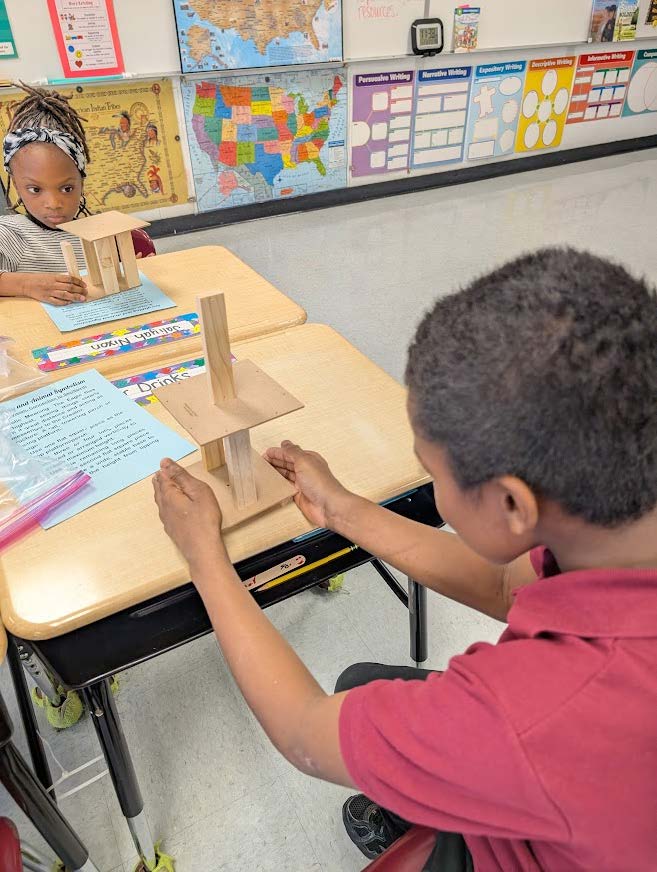
Chief Adam’s visit made learning real. He visited every third-grade classroom, engaged with student projects, asked thoughtful questions and affirmed both students and educators. His presence transformed study into relationship and inquiry into lived experience.
Four hands-on cultural centers—focused on homes and daily life, storytelling and identity, traditional games, and art and pattern design—allowed students to learn through doing, reflecting and creating. As one student shared, “I didn’t just read about Lenni-Lenape people—I felt like I met history.” This is the heart of the NJEA Consortium’s work: learning that is inclusive, truthful, collaborative and transformative. And the message for educators everywhere is clear—you can do this too. With authentic texts, shared leadership, community partnership and joyful inquiry, any school can create learning that lives in students’ hearts long after the unit ends.