
By Tamar LaSure-Owens, NJEA Consortium Design Team Ambassador
As the school year came to a close, my third-grade classroom became a space where celebration, critical thinking and historical inquiry came together in powerful ways. Through a collaborative Juneteenth and End-of-Year Celebration, students explored freedom, justice and civic responsibility while making meaningful connections to New Jersey’s own complex history.
Grounded in the NJEA Consortium Framework and inspired by Dr. Gholdy Muhammad’s Historically Responsive Literacy Framework, this learning experience centered Identity, Skill, Intellect, Criticality and Joy. Rather than treating Juneteenth as a single holiday lesson, students examined how the pursuit of freedom has shaped both our nation and our state.
Connecting national history to New Jersey’s story
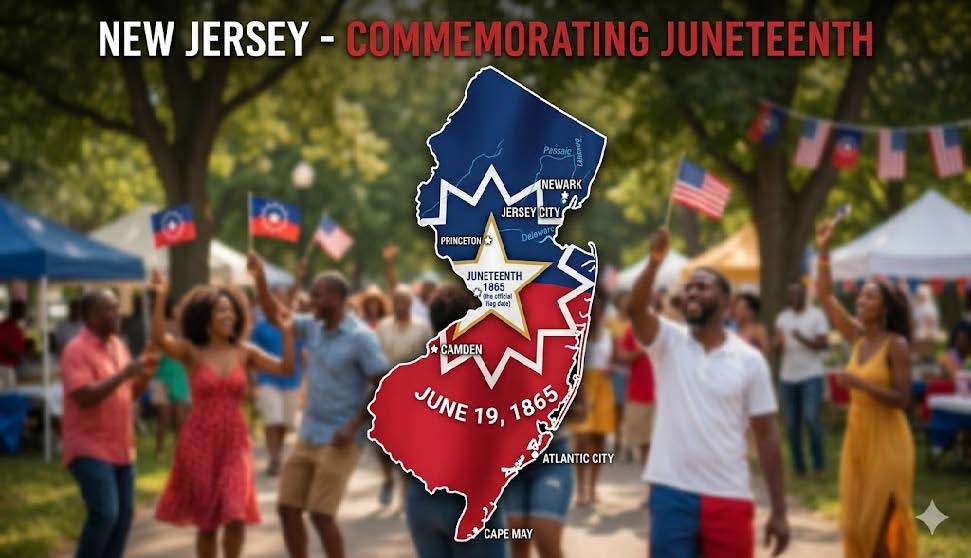
Many students were surprised to learn that New Jersey played a complicated role in the history of slavery. While Juneteenth commemorates June 19, 1865—the day freedom was finally enforced for enslaved people in Texas—our class discovered that New Jersey was the last northern state to fully abolish slavery.
Students examined how legal loopholes, including the practice of labeling formerly enslaved individuals as “apprentices for life,” allowed systems of bondage to continue long after many Americans believed slavery had ended. These conversations helped students understand that freedom and justice are not automatic; they require people to recognize inequity and work toward change. By connecting Juneteenth to New Jersey history, students saw that the story of freedom is not just a Texas story or a Southern story—it is a New Jersey story, too.
Learning through inquiry, literacy, and technology
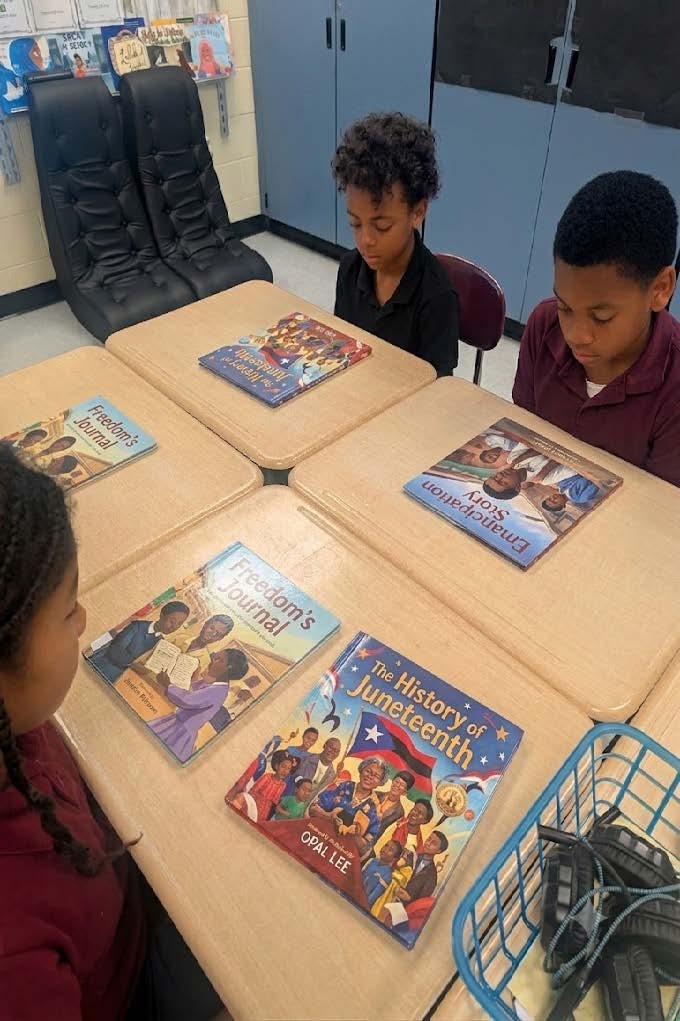
Using digital literacy tools and text-based investigations, students strengthened reading comprehension, vocabulary and critical-thinking skills while exploring the history of Juneteenth. They analyzed primary and secondary sources, examined historical timelines and built academic vocabulary connected to freedom, citizenship and civil rights. Students also investigated the origins of the word Juneteenth, learning how language itself can tell a story. Through technology-enhanced learning experiences, they engaged with rigorous content while developing the literacy skills necessary to analyze complex historical ideas.
Exploring freedom beyond our borders
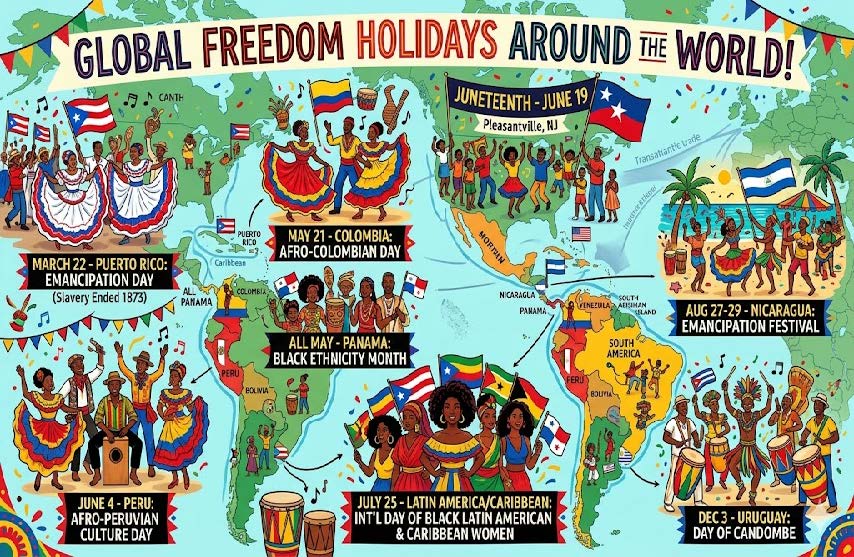
To deepen their understanding, students researched freedom celebrations throughout Latin America and the Caribbean. They learned that many nations commemorate their own emancipation milestones and honor the resilience, culture and contributions of people of African descent. These global connections helped students recognize that the struggle for freedom and human dignity extends far beyond a single country. They began to see themselves as part of an interconnected world where history, culture and civic responsibility cross borders.
Decoding the symbols of freedom
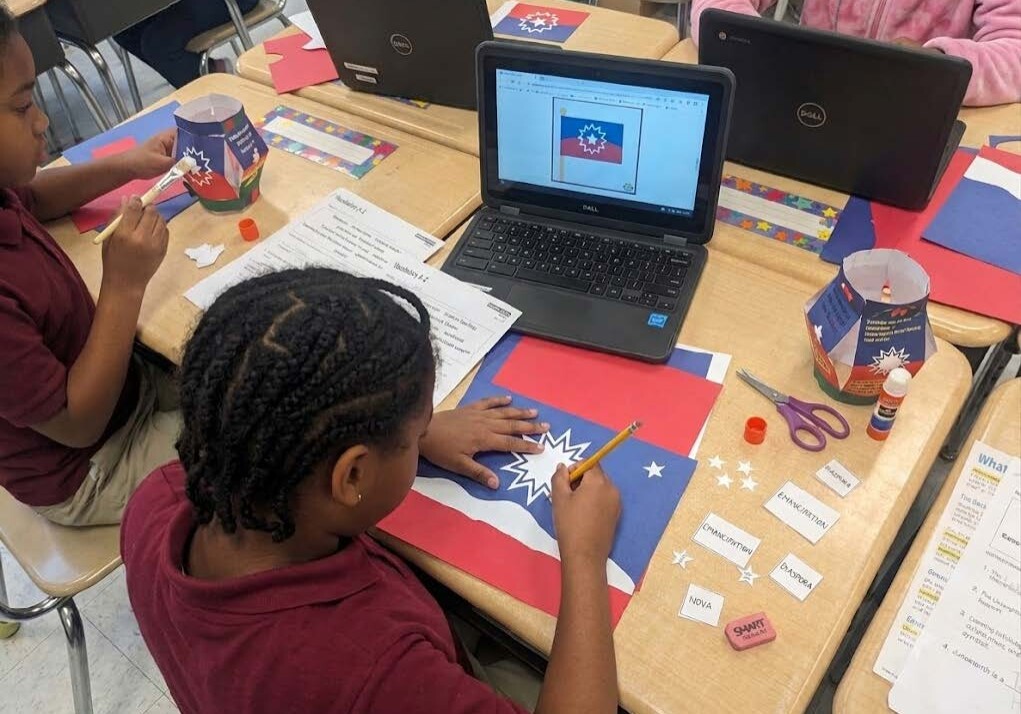
One of the most engaging lessons focused on the Juneteenth flag. Through close reading and visual analysis, students explored how symbols communicate powerful historical messages. Triumphant Third Grade learned that the red, white and blue colors affirm the contributions of African Americans to the United States, while the white star honors Texas as the birthplace of Juneteenth and symbolizes freedom across all fifty states. Students were especially fascinated by the “nova” burst surrounding the star, which represents an explosion of hope and a new beginning. By examining the flag’s design, students practiced visual literacy skills while uncovering the deeper meanings embedded in historical symbols.

Student voices reflect powerful learning
The most meaningful evidence of learning came directly from students.
“I was surprised that New Jersey was the last northern state to completely end slavery.”
“Slavery stopped families from saving money and passing things down to help their children.
“The burst on the Juneteenth flag means hope and a new beginning.”
“It makes me happy that people all over the world celebrate freedom.”
Their reflections demonstrated not only historical understanding but also empathy, critical thinking, and a growing awareness of social justice.
Ending the year with joy and purpose
Too often, difficult histories are taught without highlighting the resilience, brilliance and joy of the communities who endured them. Our Juneteenth celebration intentionally centered Black joy, community, and achievement. Triumphant Third Grade gathered to celebrate their learning, reflect on the year’s growth, and honor the significance of freedom. Through music, conversation, and shared experiences, they experienced what Juneteenth has always represented: hope, liberation and collective celebration. As a Consortium Design team Ambassador, I know that culturally responsive teaching is not an add-on—it is a pathway to deeper learning. When students investigate honest history, connect it to their local communities and celebrate the diverse stories that shape our nation, they become informed citizens prepared to build a more just future. This Juneteenth, my third graders didn’t simply learn about a holiday. They learned about New Jersey, about America, and about the ongoing work of freedom. Most importantly, they ended the school year empowered by knowledge, inspired by history and filled with joy.