
by Tamar LaSure-Owens
On Friday, Sept. 19, Triumphant Third Graders welcomed historians Pam Tyson and Janice Cambron from the Egg Harbor Township Historical Society. In this one-hour visit, students didn’t just learn history—they experienced it in a way that made local stories and artifacts come alive.
The historians introduced students to the legacy of Colonel John McKee, a Civil War veteran, visionary land developer, and by 1870 one of the wealthiest Black men in America. Born to formerly enslaved parents, McKee amassed land holdings valued at what would be over $52 million today, including thousands of acres across Atlantic County, Philadelphia, New York, Kentucky and Georgia. His vision helped shape McKee City, and his will even provided the land for what would become the Church of Saint Katharine Drexel in Egg Harbor Township. Students were fascinated and eager to share that their family and friends live in McKee City today, tying their own lives to this powerful history.
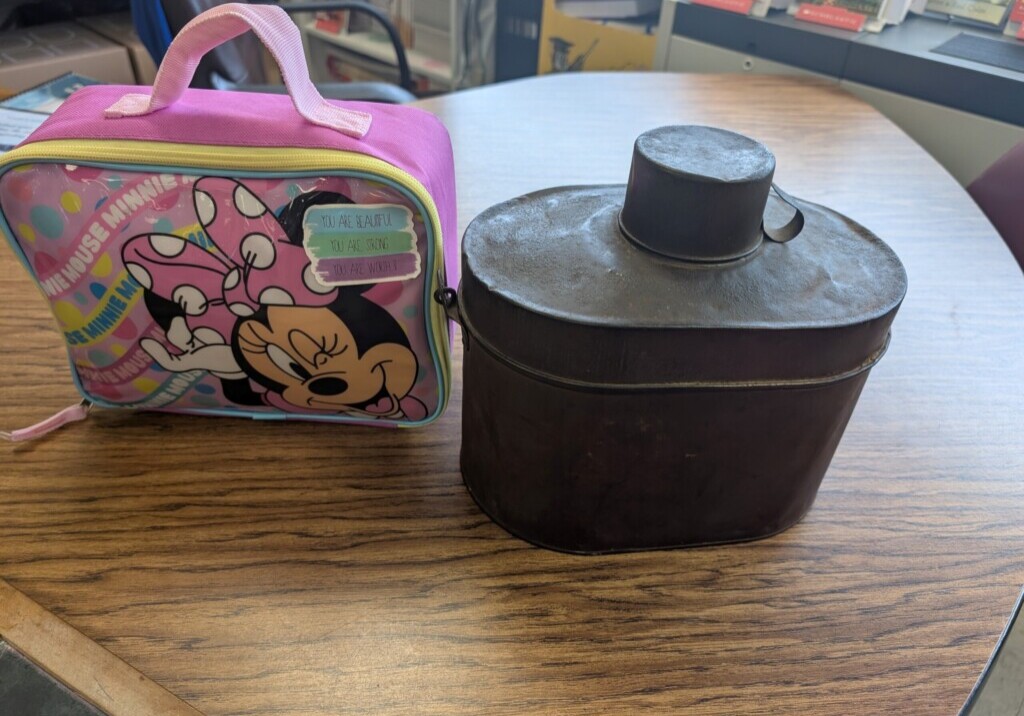
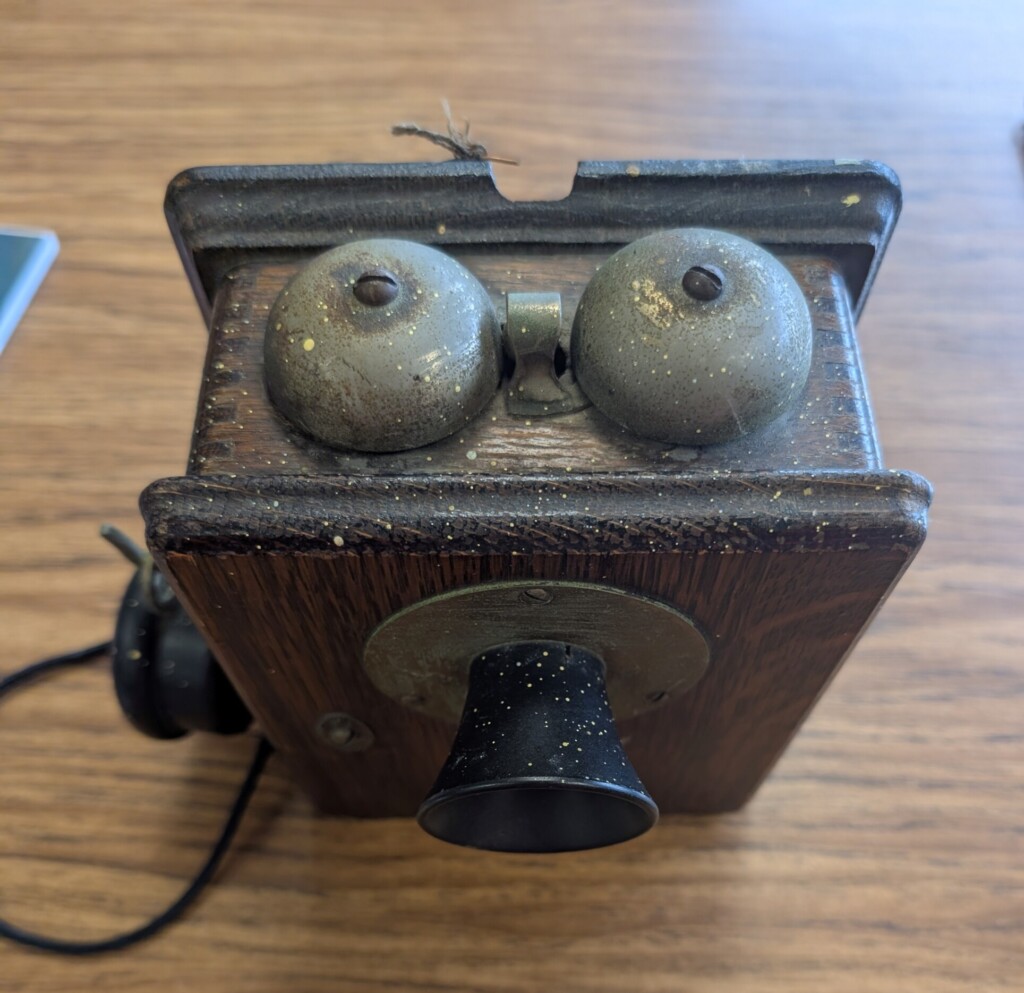
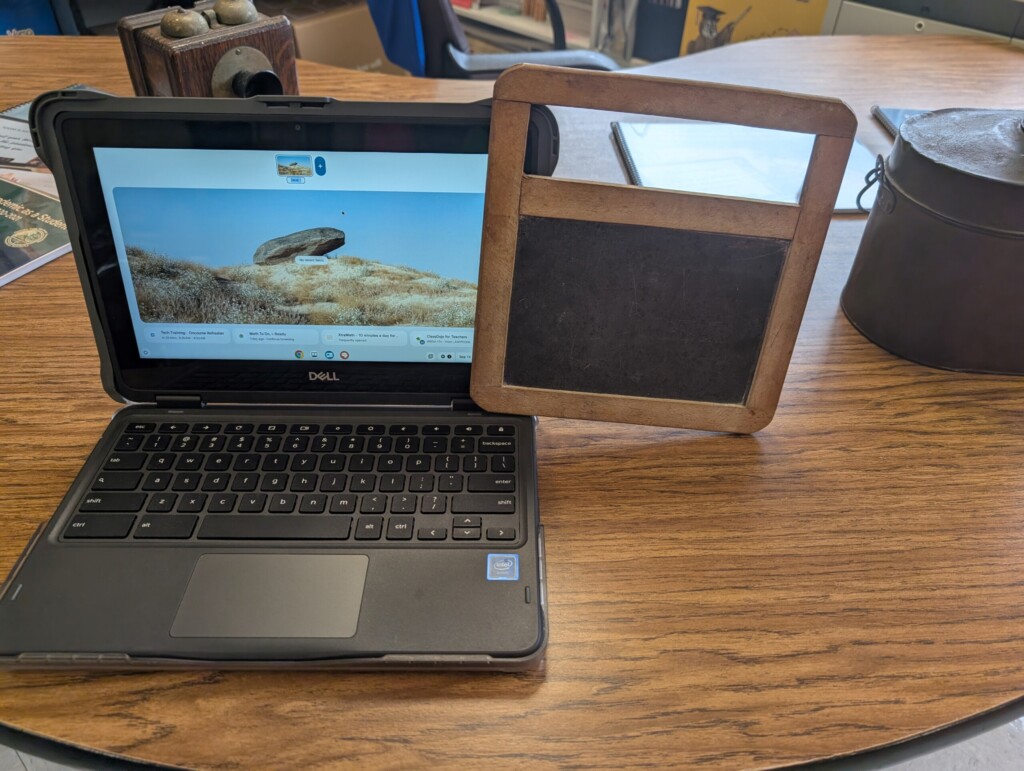
The visit was also an opportunity to introduce primary and secondary sources in tangible ways. Many third graders began by asking, “What is a primary source?” I explained that primary sources are the original objects or accounts from the time—like the glass milk bottle from English Creek, the tin lunch pail with a cup at the top, a handheld chalkboard, or the 1900s school intercom that the historians brought with them. Secondary sources, like books or articles written later, help explain or interpret those primary artifacts.
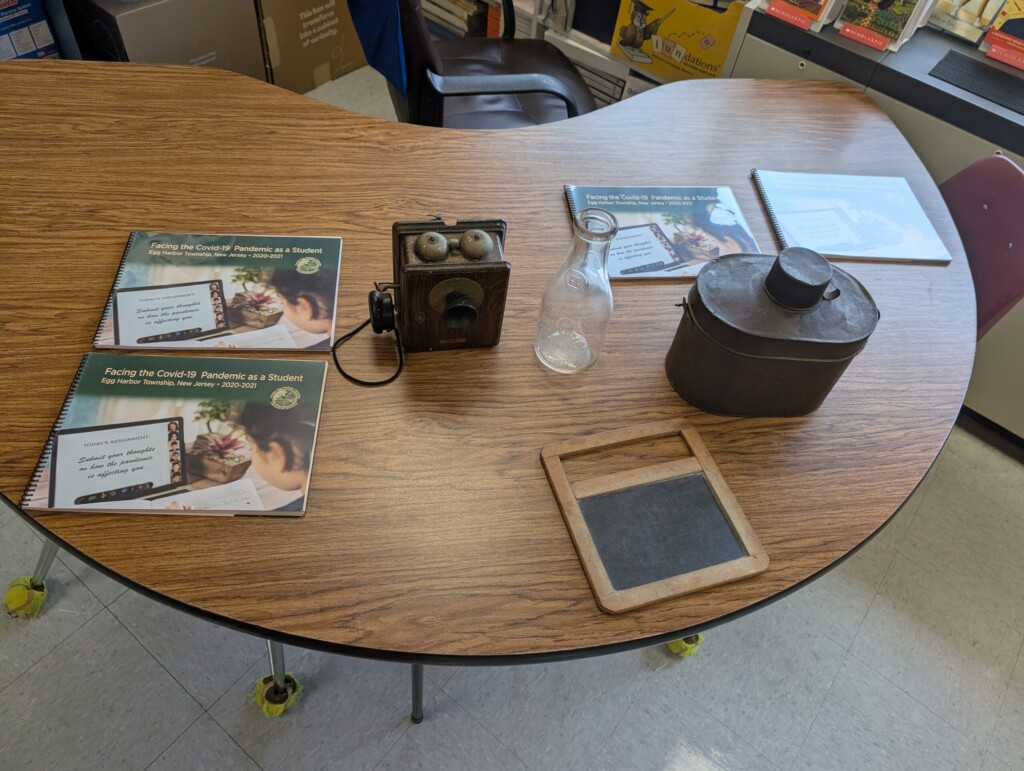
To make the concept even clearer, I introduced a student’s Minnie Mouse lunchbox and Chromebook as visuals for comparison. Students contrasted these with the tin lunchbox (once holding both food and a cup) and the chalkboard (where a child would practice letters and writings) to see how learning tools have changed over time. They immediately noted that today’s students carry plastic water bottles and thermoses to keep food warm, while children in the past relied on tin and shared resources. In these comparisons, students realized their own lives—and even their families’ oral traditions—are a form of living history, passed down across generations.
The lesson aligned seamlessly with Gholdy Muhammad’s Five Pursuits:
- Identity: Students connected with community roots through McKee’s story and their own family ties to Egg Harbor Township.
- Skills: They practiced comparing, contrasting, and analyzing primary versus secondary sources.
- Intellect: They gained knowledge of local history and the civic impact of figures like McKee.
- Criticality: They questioned how wealth, race, and legacy intersected in McKee’s life and how his contributions shaped communities.
- Joy: Students lit up as they touched, smelled, and explored artifacts, feeling part of something much bigger than themselves.
By the end of the morning, after this powerful visit, Triumphant Third Graders didn’t just study history—they lived it. They left understanding that history isn’t only found in textbooks; it’s all around them—in their communities, families, and even in the everyday objects they use.
Call to Action: As educators, we are reminded of the importance of rooting lessons in local stories and tangible history. When students see themselves and their communities reflected in learning, they develop not only knowledge but also pride, empathy, and curiosity—the true heart of education.